Monday, January 7, 2013

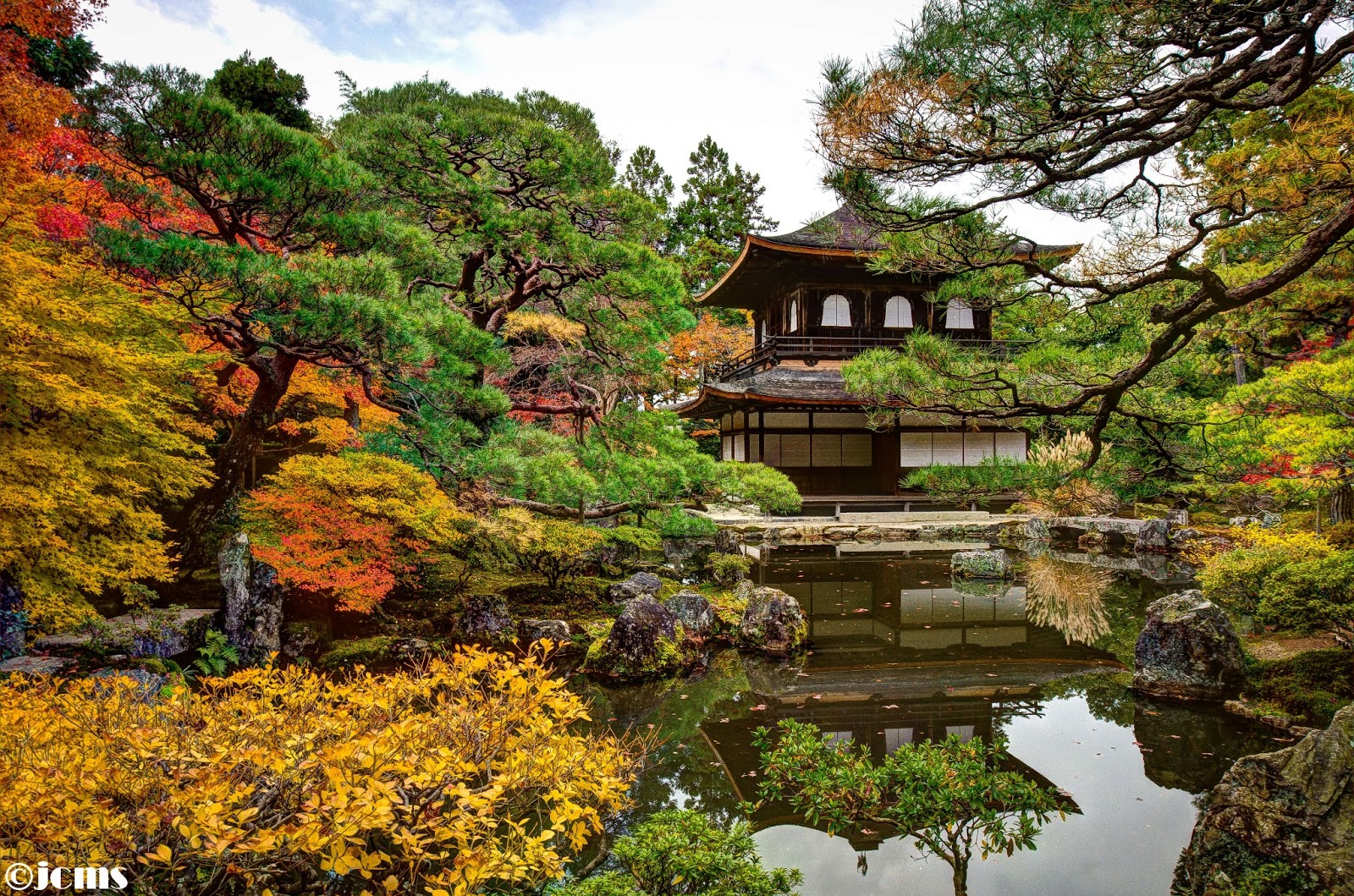
Ginkakuji (銀閣寺), the Silver Pavilion


Ginkakuji is one of the major tourist spots in Kyoto. But, unlike most tourist spots in Japan, especially in Tokyo, it is not easily accessible by train. Most spots in Kyoto can be accessed by bus, and since we came from Fushimi Inari Shrine, we rode Bus 17 from Demachiyanagi station (出町柳駅) towards Kinrin Shako-mae (錦林車庫前行). Normally, the fare is 220円, but some city buses were also included in our Kansai Surutto Pass, so that ride became free. We alighted at the Ginkakuji bus stop (銀閣寺道), and because there were a lot of other tourists, we just followed them towards the temple.

The walk from the bus stop to the temple took about 10 minutes. There were many shops along the way, most of them selling souvenirs. Admission to the temple grounds is 500円. Actually, the place was not really that big. Once you get inside, the actual temple is already there, next to the sand garden. The route goes around the entire grounds, covering the other temple called Togudo and the ponds and gardens around the pavilion. We covered the entire place for about an hour, and walked back to the bus stop to get to our next stop, the Golden Pavilion.


Japanese information about Ginkakuji can be found here.
Ginkakuji from japan-guide

Monday, December 10, 2012

Fushimi Inari Shrine (伏見稲荷大社)


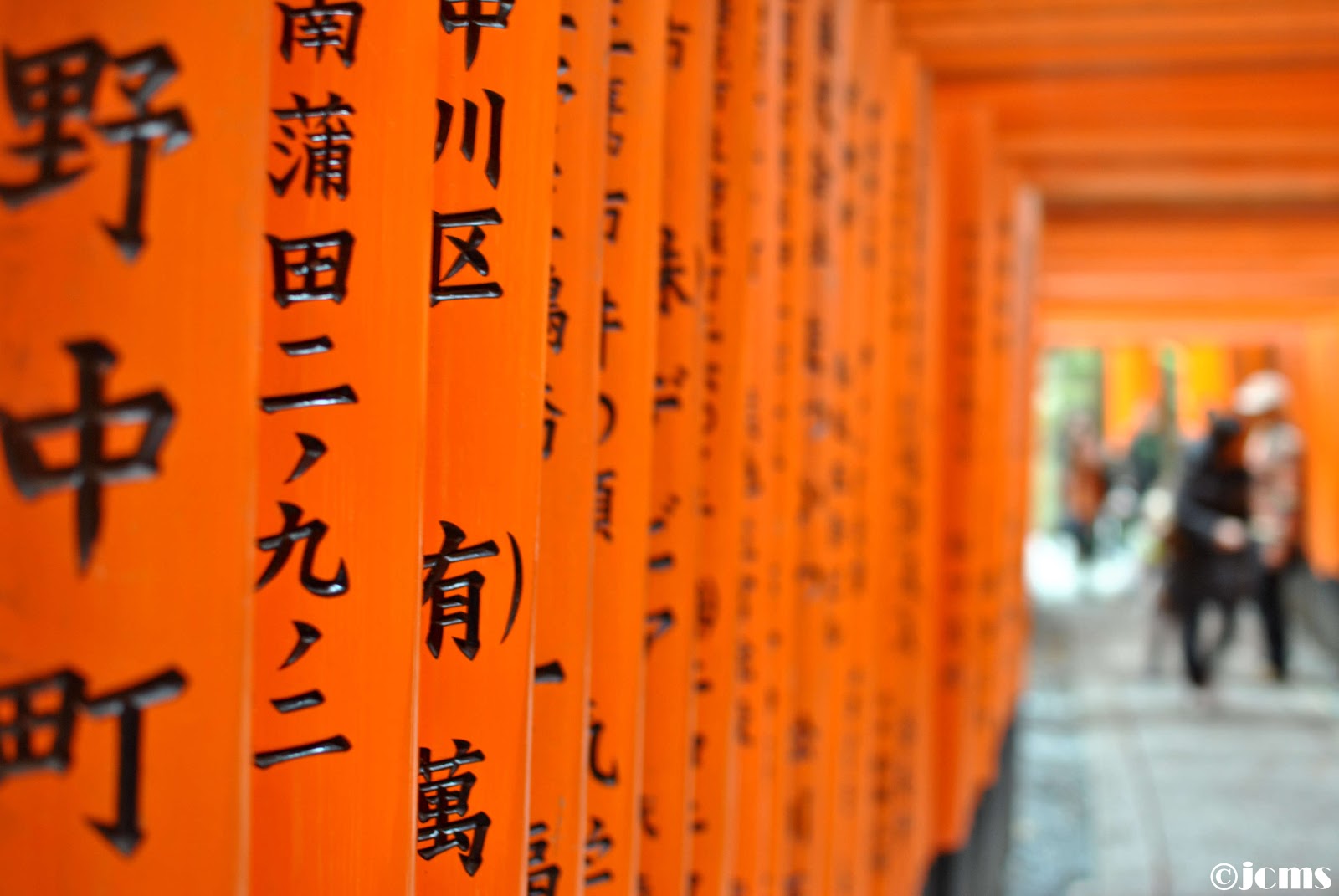
Torii(鳥居) and orange. Those two words are enough to describe Fushimi Inari shrine in Kyoto. Unlike other shrines or temples, Fushimi Inari is always open to the public. There's also no admission fee and it's quite near from the train stations.

The shrine is accessible via the Inari station (稲荷駅) of the JR Nara line (JR奈良線) and the Fushimi Inari station (伏見稲荷駅) of the Keihan Main line (京阪本線). Inari station is nearer to the shrine, but because JR lines are not included in our Kansai Surutto pass, we had to settle for the Fushimi Inari access. From this station, walking to the shrine will take just a couple of minutes towards the east. This path will lead to the "side entrance" of the shrine, with the main entrance to the right.


Fushimi Inari shrine is actually composed of many smaller shrines. When we looked into the map, it's like the entire mountain is filled with toriis and shrines. Of course, this is what Fushimi Inari is known for, so we took a short hike up the mountain to the first small shrine, which I really don't know what it's called. We passed by a shrine with a horse statue inside and just followed other tourists and some locals. I just wanted to get a glimpse of the toriis - big and small - and experience passing through them. Anyone who wants this will not be disappointed.


At the end of the first set of toriis was the first shrine. That first set started with 1 path of big toriis and ended it with 2 lines of small toriis as it branched out in the middle. Even though there were many tourists around, the sacredness of the place could still be felt especially when locals prayed. After taking some pictures, we headed back towards the main entrance and to the train station. By that time, the stalls along the street were already set-up with souvenir items.


Fushimi Inari from japan-guide
Fushimi Inari Shrine official website

Tuesday, December 4, 2012

Universal City Osaka and Dotonbori (道頓堀)


Some say you weren't in Osaka if you haven't been to Universal Studios Japan and didn't see the Glico man in Dotonbori. Since Osaka Castle was part of the itinerary, I thought we might as well go to these places. On second thought, not exactly like that. We didn't have the luxury of time, so enjoying an entire theme park was not a priority, but I thought we could still at least use some time at Universal City Walk, a shopping mall just outside Universal Studios.

From Osaka Castle, we took the Chuo Subway line (大阪市営地下鉄中央線) bound for Cosmo Square (コスモスクエア行) and transferred to the JR line at Bentencho station (弁天町駅). Then we took the train going to Nishi-kujo (西九条行), and from Nishi-kujo, we transferred to the next train going to Sakurajima (桜島行) and got off at Universal City station (ユニバーサルシティ駅). Only the subway was included in our Kansai Surutto pass, so we had to pay extra for the JR line, which was only 160円. We had no choice because only JR lines pass by Universal City station.

Transfer at Bentencho station

Transfer at Nishi-kujo station
It was lunch time when we arrived at Universal City, so first thing that we did was find a restaurant. There were a number of shops on the 5th floor and we decided to have some yakiniku (焼肉) at Yakiniku Den. They had a lunch buffet for 1,480 yen, but we opted to just order from their regular menu. I had a pork loin yakiniku (ロース) and my wife had galbi (カルビ). Both were 950円 exclusive of tax. This included unlimited rice, soup and salad, but not drinks.


After lunch, we just strolled around the area; checked out and bought some souvenirs from various shops, went near Universal Studios' gate to take some pictures of the iconic globe, and also happened to see a monkey show. Hard Rock Osaka is also located here in Universal City Walk.


From Universal City station, we went back to Nishi-kujo, then transferred to the Osaka Loop line (大阪環状線) in the direction of Osaka station (大阪方面). Again, we paid an extra 160円 here, then transferred to the nearby Tamagawa station (玉川駅) of the Sen-Nichimae line (大阪市営千日前線) and took the train going to Minami-tatsumi (南巽行). We finally got off at Namba station (なんば駅).


I think it's best to go out via Exit 14 of Namba station when going to Dotonbori and just go straight ahead until the Dotonbori Bridge (道頓堀橋). That's already the Dotonbori Canal, and the Glico man would be right there to the right. Actually, I didn't see anything special about it, but even locals posed and took pictures in front of this huge ad. For me, if you didn't know that it's an Osaka landmark, you really couldn't tell. But it is famous and people really just go there to see it, and since I didn't know where else to go to in Osaka, I added this to our itinerary.


Ebisubashi (Ebisu bridge)


Universal City Walk official web site
Minami (Namba) from japan-guide